
Can anxiety cause depression?

Can anxiety cause depression?

Can anxiety lead to depression?

Yes, when someone suffers from Anxiety they are usually one of high functioning or low functioning. The high functioning sufferer is still able to lead their life, albeit anxiously. They will still get on the bus that makes them anxious even though they experience discomfort, these sort of people often have coping strategies to help them through their day. Whereas the low function anxiety sufferer tends to avoid any situation that may cause anxiety. Rather than coping with a situation they will simply do their best to avoid it, but this has the knock on effect that their world becomes smaller and smaller as they do less and less things they would like to do.

Mild depression and situation depression

Both are very common in my therapy room. I don’t tend to treat depression, I treat the anxiety triggers if I believe this is where it stems from. Once the anxiety triggers are lifted, the depression then also abates on its own. This is because the trigger for the depression is the anxiety.

Imagine a man suffers social anxiety and becomes scared to go to work. He then loses his role at the company as having too much time of sick. After a few months he is now behind on his rent. At this point depression can set in. He is now depressed about the situation he finds himself in, and anxious and that he may lose his house etc. A situation has been created that has an original starting point from anxiety.

If we dig backwards from where the client currently feels, to where it started, we will see the triggers that have caused them to be where they are. Releasing those triggers then have the knock on effect of lifting the depression. The depression is kept in place by those triggers. So without the triggers the depression can’t exist.

Situational Depression caused by anxiety

It is fairly common for people to feel mild or situational depression relating to their anxiety. The anxiety makes life unbearable in places and this has a knock on effect of being unhappy.

The type of depression that is experienced this way is usually mild and is often short lived (if treated of course!). People that suffer anxiety won’t necessarily develop any depression of the back of it. Because we can build coping/avoidance techniques sometimes we are not even aware of what we are missing out on. We just see it that, that is the way life is, it’s who we are. It is clear that anxiety and depression are different but they do have overlaps in the symptoms experienced. So for some people they don’t even know which one they are suffering or if they are suffering both.

BWRT is a rapid change therapy that is able to go after the original triggers of the anxiety and remove them. If you don’t feel anxious, in turn any related depression is lifted.

Hypnoanalysis also allows the lifting of any triggers. This can sometimes be a longer therapy to undertake but one that can have superb side effects like increased self-confidence.

For Prompt Rapid Change contact me here

Understand how BWRT can promote Rapid Positive Change here
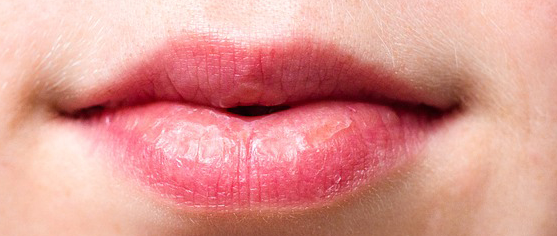
Can anxiety cause a dry mouth?

Can anxiety cause a dry mouth, yes!

To understand why this happens we first have to have an understanding of the fight, flight or freeze response. This response is the name given to the reaction the body makes when it feels it is or perceives the organism (you) is in danger. It is worth side noting the word ‘perceives’. As we grow through childhood we create many rules, most of which are beneficial but we do also create incorrect beliefs about what may cause us harm. These are created mainly in childhood when we have no frame of reference so take something at face value. For example – watching your mum run away from a spider, the reality is ‘she is scared of it’ but you don’t need to be. But because your frame of reference about spiders is minimal you take for granted her actions are the best actions and install them in your own psyche.

So when we are faced with a perceived threat and feel anxiety our body is following its routine for the fight, flight or freeze response. This response is specifically designed to allow the body to be as strong and fast as possible to allow the escape from a threat. Think of it as Popeye having his spinach. It allows our body to temporarily re-configure itself to be the best it can to either fight against the threat, flee the threat, or freeze until the threat passes. It’s a fantastic built in response but it’s extremely unnerving when its goes off at the wrong time. This is because we are given all this potential energy to face a threat when we are not in one. This energy gets stuck in the body and all we do is feel the uncomfortable sensations that is produces.

Survival mode

When the body is in this mode it shuts down all unnecessary functions so it can concentrate on those that can help us survive at that moment in time. One of the functions that is shut down is the digestion system. If we are in a real threat or a perceived threat we are not likely to take a break and have a packet of crisps. Because eating at this moment is not required this function is shut down and you may well become aware of having a dry mouth. The saliva in the mouth is used to aid with chewing and swallowing and since we are not going to be eating this is why the saliva is turned off – hence having a dry mouth

This is because instead of being in a real threat you are overly aware of the symptoms that arise due to triggering the fight, flight or freeze response when it’s not required.

So, it makes perfect sense to get a dry mouth when you are feeling anxious. Because the body is more interested in protecting you than eating food at that moment in time.

Understanding the trigger that cause the fight, flight or response is then key to removing the symptoms. For example if you get this every time you are in public space, using BWRT to change the response could fix this issue rapidly.

For Prompt Rapid Change contact me here

Understand how BWRT can promote Rapid Positive Change here

Can anxiety cause Blushing?

Can anxiety cause Blushing?

Yes, blushing is a symptom of your Fight or Flight  response attempting to remove you from what it perceives is a dangerous situation. In my years of practise it has to be said that blushing is one of the rarer symptoms but still affects so many people.

Blushing itself is extremely distressing and this usually has a knock on effect on how the sufferer lives their life. They usually restrict doing things that may make them blush and this could include any host of events from going to school/work to attending meetings or going out with friends, so it can have a knock on effect of social anxiety. Blushing can become a vicious circle as it starts by happening in one situation. The sufferer then worries it will happen in another situation and this then causes them to start avoiding more and more situations – depression can then follow.

Do the experts know why?

It is still not entirely understood why we blush but many experts believe it was originally due to attract a partner. Like a peacock can spread its feathers we could show interest by going red. Even in this situation for how we have evolved it is a flawed system.

Avoidance – but we don’t want to avoid it, do we!

The reason for blushing is that when we trigger our survival instinct we tend to either have a coping mechanism or an avoidance mechanism. In this case it is used as an avoidance. If we don’t place ourselves in a situation we won’t blush. You can see that from a basic logic point of view this works really well but the reality is we are not in danger and it’s the trigger that is incorrect and not the response.

There is part of the psyche that has learnt an incorrect belief and hence the trigger is made. This is made in subconscious and our consciousness awareness then conflicts as what we want to do and feel isn’t the same. In this instance we want to be out with our friends (consciousness) but because we may blush we stay at home (subconscious). Our subconscious is a heavyweight  fighter and generally wins when the two come together.

So we know why we blush – we have a trigger in our mind that states that something is dangerous and to keep us safe it uses this as a tool for avoidance. But what is actually happening……

When our survival is at stake or at least perceived to be by our subconscious we release adrenaline from the adrenal glands in the kidney. This adrenaline runs through the veins and a fact that will annoy every sufferer of blushing is that the veins don’t get red anywhere on your body except for you face.

The triggers – one of the closely linked triplets

We blush usually when the trigger is linked to guilt, shame or embarrassment in some way or another.

So, how can blushing be treated? Using BWRT we would ask the client to think of the worst time that they have gone ‘red’ and fire up that emotion. Once that emotion is fired up a preferred response would be including in the recursive looping to feel instead. The magic of BWRT is that it rewires the emotion before it has happened and allows you to choose a feeling you want instead – for example calmness. Once the neural pathway has been reconfigured the blushing will cease to be because the trigger now has a different response.

Second way is via regression using Hypnoanalysis. What we would aim to do here is regress the client back to the original trigger and allow that trigger to be seen from the adult perspective and then released. Once the trigger is no longer firing the end result of blushing can no longer happen.


More details about blushing can be found here

For Prompt Rapid Change contact me here

Understand how BWRT can promote Rapid Positive Change here

Can anxiety be cured?

Can anxiety be cured?

In Short yes you can be cured of Anxiety! Anxiety happens where two parts of the brain suffer a conflict of interest. These two parts are often referred to as the Consciousness and Sub-conscious.  For someone suffering anxiety about something, often doesn’t want to feel the way they do about it – hence the conflict. The strange realitys is your sub-conscious doesn’t want your anxiety cured because it doesn’t believe its a fault.

For instance, riding a lift. The person consciously wants to take the lift to the 20th floor because its quick and easy compared to all those flight of stairs. But the sub-conscious mind has an incorrect belief relating to the lift and decides it will compromise your life. The sub-conscious only works in black or white, something is either safe or it isn’t safe. If it believes it is not safe it will do whatever it can to stop the person doing the thing they are about to – which in this case is using the lift. The person may suffer a panic attack, sweats, and shakes – all number of symptoms that are designed purely to stop the person using the lift. 

Unfortunately when we bow down to these symptoms and in this case, use the stairs, the brain gives itself a pat on the back thinking it has done the right thing and actually reinforces that incorrect pattern so it’s even harder to use the lift the next time.  Which is why people often don’t grow out of anxiety and unfortunately get worse!

The part of your doing its best to look out for you!

But why didn’t the sub-conscious want you to use the lift? Well this could be due to a childhood repression that has a similar feel to the current situation. Although not usually this obvious it may well have been as a child being trapped in a cupboard whilst a game of hide and seek went wrong. At that moment in childhood the brain created a lesson to follow ‘don’t get trapped in small spaces’.

It believes it’s keeping you safe but the program is out of date and was only related to that one instance in childhood but the brain once it stores an incorrect belief doesn’t then modify it.

The second reason this may happen is that often people are carrying around a lot of stress, possibly without even realising it, maybe exams on the horizon, marriage, about to become a parent, moving house etc. Sometimes the pressure inside ourselves gets too much and it projects itself out into the world. If you were stood in a lift and at that moment it all gets too much you can be left believing that the lift is the reason for you feeling like you do. Even though it’s often the secondary issue at the moment in time it then becomes the main reason.

Can your anxiety be cured, yes! You can either use analysis to drive all the way back to childhood and remove all the incorrect beliefs that you have accumulated. Or using BWRT you can rewire the feelings created when the triggers are activated.

Learn how BWRT can help cure you, yes you! here

Understand how BWRT can promote Rapid Positive Change here